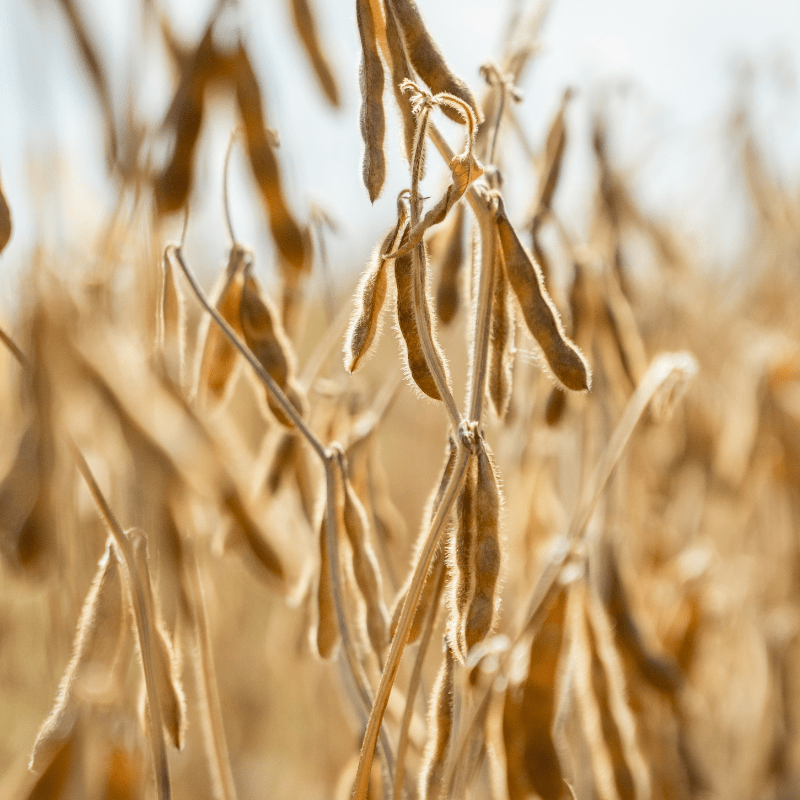



As soybeans continue to develop across the Northern United States, diseases like Frogeye Leaf Spot (Cercospora sojina) are showing up on susceptible varieties. In the past, Frogeye Leaf Spot was a major yield detriment across the US but with the adoption of resistant varieties, this disease has decreased in overall severity. Even with the increase in use of these resistant varieties, Frogeye Leaf Spot continues to be a major disease in US soybeans with an estimated 3-million-bushel loss in 2024 (Crop Protection Network 2025).
Disease Overview & Identification
- Life Cycle: Frogeye Leaf Spot overwinters in crop residue and infected seed. As conditions become favorable, especially warm, humid weather, it infects young leaves. Lesions take two weeks to develop after infection so mature leaves generally show lesions. Extended periods of rainfall with overcast weather favor disease development Frogeye Leaf Spot, especially on susceptible varieties. Variety selection is critical for reducing Frogeye Leaf Spot disease potential, with crop rotation and residue management being important components to reduce overwintering inoculum.
FIGURE 1: Frogeye Leaf Spot Disease Cycle
(Crop Protection Network 2019)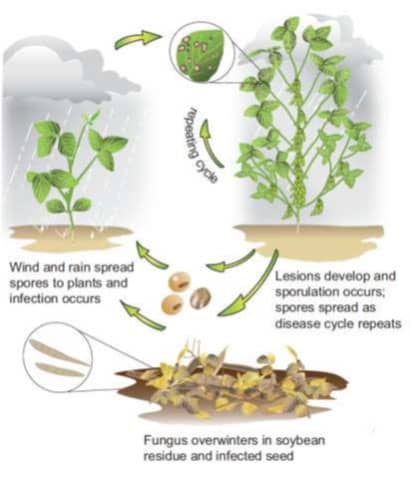
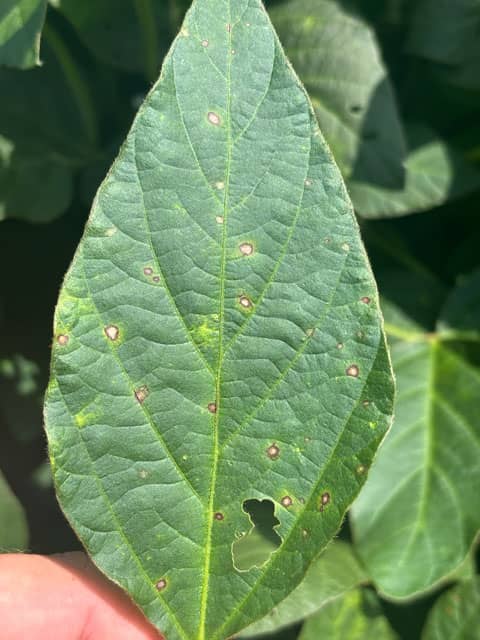
- Symptoms: Look for small, irregular oval lesions with gray to reddish borders, usually in the upper canopy. Early lesions are dark and water-soaked; under humid conditions, gray fuzzy sporulation may appear on the underside of leaves. As the disease progresses, lesions can merge, causing blighted areas and premature defoliation.
FIGURE 2: Frogeye Leaf Spot Disease
Management Strategies
- Variety Selection: Choose resistant soybean varieties whenever possible. This is the most effective way to reduce disease risk.
- Crop Rotation & Residue Manage: Rotate crops and manage residue to reduce overwintering inoculum, but remember that spores can still spread from adjacent fields.
- Fungicide Applications: Preventative fungicide applications are critical, especially during favorable conditions and early reproductive stages (R1 to R3). Even resistant varieties can suffer yield loss under high disease pressure.
- Nutritional Products: Incorporate timely nutritional products with fungicide applications to maximize yield potential.
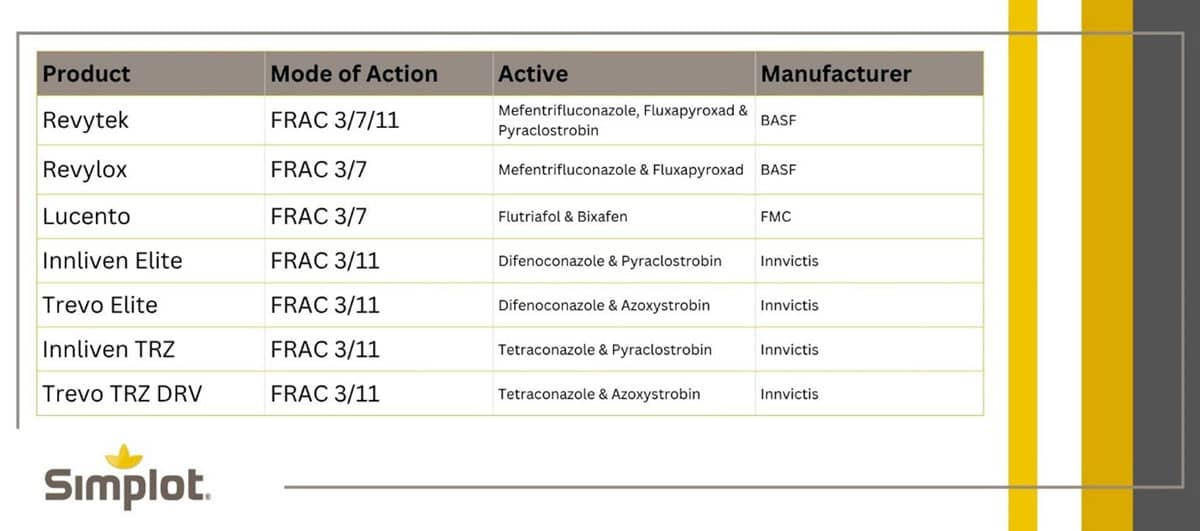
Recommended Fungicides for Frogeye Leaf Spot
Key Takeaways
- Extended periods of rainfall and overcast weather favor Frogeye Leaf Spot, especially in susceptible varieties
- Symptoms include small, irregular lesions with gray to reddish borders in the upper canopy.
- Use resistant varieties and preventative fungicides during favorable conditions.
- Combine fungicide applications with timely nutritional products for best results.
Please consult any of your local Agronomic Sales Enablement Team or your Simplot Grower Solutions Crop Advisor for any further questions and product options.
Authors
Darrin Roberts (Northern Plains)
Chris Carpenter (Great Plains)
Kevin Caffrey (Eastern Cornbelt)